Staking Calculator Ledger Live: Calculate Your Earnings
Forecast your passive income and plan your crypto staking strategy with accurate earnings projections
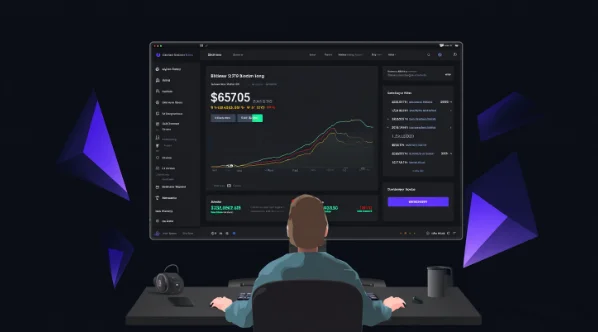
How to Calculate Ledger Live Staking Earnings
Understanding potential returns from cryptocurrency staking requires systematic calculation considering multiple variables that influence actual earnings over different timeframes. Learning how to accurately estimate staking calculator Ledger Live projections helps users make informed decisions about capital allocation across various networks, compare opportunities effectively, and set realistic expectations for passive income generation from proof-of-stake participation. Calculation methodologies range from simple annual yield estimates to sophisticated compound interest projections accounting for reward reinvestment, network condition changes, and variable rate fluctuations affecting long-term accumulation trajectories. Explore the best coins to stake to find assets with attractive yields.
Accurate staking earnings calculations involve understanding both the mathematical formulas underlying reward generation and the practical factors that cause actual results to deviate from theoretical projections. While basic calculations multiply staked amounts by annual percentage yields to estimate yearly returns, comprehensive analysis considers compounding effects from reward reinvestment, validator commission fees reducing net returns, potential network inflation diluting token value, and market price volatility affecting fiat-denominated outcomes. The Ledger Live staking earnings projections provide valuable planning tools when users understand both calculation mechanics and limitations inherent in forecasting future returns from dynamic blockchain ecosystems. Learn more about Ledger Live staking to understand the basics.
Understanding APY and APR
Annual Percentage Yield (APY) and Annual Percentage Rate (APR) represent different approaches to expressing staking returns with important distinctions affecting calculation accuracy. APR represents simple interest calculations showing annual returns without accounting for compounding effects from reward reinvestment. If a network offers 10% APR on 1,000 tokens, basic calculation projects 100 tokens earned over one year assuming no reward reinvestment. This straightforward approach works for networks without automatic compounding or when users don't manually restake rewards.
APY incorporates compounding effects showing total annual returns including gains from reinvesting accumulated rewards. The same 10% base rate with daily compounding produces approximately 10.52% APY as rewards themselves generate additional returns. The frequency of compounding significantly impacts APY calculations with daily compounding producing higher effective yields than monthly or quarterly compounding. Understanding whether advertised rates represent APR or APY helps users make accurate comparisons across networks and set appropriate expectations. The staking rewards forecast should specify which metric applies to avoid overestimating returns from simple APR rates when compounding doesn't occur automatically.
Compound Interest Effect
Compound interest represents the most powerful wealth-building mechanism in long-term staking strategies where reinvested rewards generate exponential growth over extended periods. The mathematical formula for compound interest A = P(1 + r/n)^(nt) calculates final amount (A) from principal (P), annual rate (r), compounding frequency (n), and time in years (t). For example, staking 10,000 tokens at 10% APY with monthly compounding over 5 years produces approximately 16,453 tokens compared to 15,000 from simple interest without compounding, representing nearly 1,500 additional tokens from compound effects.
The impact magnifies over longer timeframes with 10-year compound projections showing dramatically higher returns than linear simple interest calculations. This exponential growth explains why early staking participation and consistent reward reinvestment create substantial wealth accumulation advantages over time. Users should understand that compounding requires either automatic reward restaking by networks or disciplined manual reinvestment by delegators. Networks without automatic compounding like some Cardano stake pools require users to manually claim and restake rewards to achieve compound growth, making personal diligence crucial for maximizing long-term staking calculator Ledger Live projections.
Staking Calculator Ledger Live: Key Variables
Accurate earnings projections require understanding variables that significantly influence staking returns and incorporating realistic values into calculation models.
Initial Investment Amount
The starting staked amount represents the foundation determining absolute earnings though percentage returns remain consistent across different investment sizes. Staking 1,000 tokens at 10% APY generates 100 tokens annually regardless of whether that represents a user's entire holdings or a small portfolio allocation. However, minimum staking requirements on some networks create entry barriers where users must accumulate threshold amounts before participating, affecting accessibility for smaller investors.
Initial investment decisions should consider opportunity costs from alternative uses of capital, personal liquidity needs ensuring sufficient liquid holdings remain available, and portfolio allocation strategies balancing staking commitments across multiple networks and asset types. The Ledger Live staking earnings calculations scale linearly with investment amounts, enabling users to model different allocation scenarios identifying optimal distributions maximizing returns while maintaining appropriate diversification and liquidity reserves for unexpected needs or market opportunities.
APY Rate
The annual percentage yield represents the most variable calculation input as rates fluctuate based on network conditions including total staking participation, inflation adjustments, and validator performance. Current APY provides reasonable starting points for near-term projections though users should understand rates aren't guaranteed and can change substantially over time. Networks with 15% APY today might show 10% or 20% in future months as participation levels shift or governance proposals modify reward mechanisms.
Using conservative rate assumptions in long-term projections helps avoid disappointment from overoptimistic forecasts based on temporarily elevated yields. Averaging rates over recent months rather than using current snapshots provides more stable inputs for multi-year projections. The staking rewards forecast should include sensitivity analysis showing how varying APY assumptions impact projected outcomes, helping users understand the range of potential results rather than fixating on single-point estimates that might prove inaccurate as conditions evolve.
Staking Duration
Time horizons dramatically affect total earnings through compound interest accumulation with longer durations producing exponentially higher returns from consistent reinvestment. One-year staking produces modest additions to principal while five or ten-year commitments can double or triple holdings through compound effects. However, longer projections introduce greater uncertainty as network conditions, competitive landscapes, and cryptocurrency markets might change substantially over extended periods making distant forecasts increasingly speculative.
Users should match staking durations with personal investment timeframes recognizing that cryptocurrency volatility and network evolution create risks for very long-term projections. Conservative investors might focus on one to three-year horizons where conditions are more predictable, while aggressive long-term holders comfortable with uncertainty might model five to ten-year scenarios understanding these represent aspirational targets rather than reliable forecasts. The staking calculator Ledger Live projections should clearly indicate timeframe assumptions helping users interpret results in appropriate contexts.
Staking Rewards Forecast: Realistic Expectations
Setting appropriate expectations requires understanding factors that cause actual returns to deviate from initial projections based on static assumptions.
Market Condition Impact
Cryptocurrency price volatility significantly affects fiat-denominated staking returns as token price changes overwhelm nominal yield effects. Earning 10% annual yield loses appeal if token prices decline 30% over the same period resulting in net fiat losses despite successful reward accumulation. Conversely, 5% yields combined with 50% price appreciation produce excellent total returns substantially exceeding pure staking income. The Ledger Live staking earnings should be evaluated holistically considering both staking yields and potential price movements though predicting price changes introduces speculative elements beyond yield calculations.
Bull markets often show declining staking participation as users prioritize trading opportunities over locked staking positions, potentially increasing yields for remaining stakers as reward pools distribute across fewer participants. Bear markets might increase participation as users seek yield during price weakness, reducing individual returns through broader distribution. These cyclical patterns affect actual earned rates making multi-year averages more reliable than current snapshot rates for long-term staking rewards forecast projections spanning different market conditions.
Network Changes
Protocol upgrades, governance proposals, and ecosystem evolution introduce changes affecting staking economics over time. Networks might adjust inflation rates through governance votes altering reward availability, modify slashing conditions affecting risk profiles, or implement protocol improvements changing validator economics and delegator returns. Major upgrades like Ethereum's transition to proof-of-stake fundamentally altered network economics creating new staking opportunities with different characteristics than predecessor systems.
Users should monitor network roadmaps and governance proposals understanding upcoming changes that might affect staking returns or terms. Participating in governance where possible enables input on decisions affecting staking economics while staying informed about community discussions provides early awareness of potential changes. The staking calculator Ledger Live projections represent snapshots based on current conditions with actual long-term results depending on network evolution requiring periodic strategy reviews and allocation adjustments responding to changing circumstances. Review staking risks to understand factors that might affect your returns.
Ledger Live Staking Earnings: Asset Breakdown
Network-specific calculations account for unique characteristics affecting returns across different proof-of-stake blockchains.
Ethereum Staking Calculator
Ethereum staking projections use 3-5% APY ranges reflecting post-Merge network conditions with actual rates depending on total ETH staked and validator performance. For 10 ETH staked at 4% APY, annual earnings project approximately 0.4 ETH without compounding or 0.408 ETH with monthly compounding. Five-year projections at consistent 4% APY with monthly compounding produce approximately 12.21 ETH from 10 ETH initial stake, representing 2.21 ETH in cumulative rewards.
Ethereum calculations should account for gas fees potentially affecting reward claiming though most staking implementations handle distribution automatically without user transactions. Unstaking timelines impact liquidity planning though network upgrades have restored withdrawal functionality. The combination of moderate yields with network maturity and strong fundamentals makes Ethereum attractive for conservative stakers prioritizing established platforms over maximum yield chasing.
Cardano Staking Calculator
Cardano projections use 4-6% APY ranges with 5-day reward distribution frequency enabling regular compounding for improved long-term returns. Staking 10,000 ADA at 5% APY with epoch-interval compounding produces approximately 500 ADA first year, with five-year projections reaching approximately 12,833 ADA from compounding effects. The zero lock-up feature provides liquidity advantages though calculations should assume committed holding periods for meaningful compound accumulation.
Cardano's predictable reward distribution and transparent stake pool metrics simplify calculation accuracy compared to networks with variable validator performance. Pool operator fees typically 2-5% reduce net returns requiring adjustment in projection calculations. The staking rewards forecast for Cardano benefits from consistent mechanics and minimal slashing risks creating reliable projection frameworks for planning purposes.
Polkadot Staking Calculator
Polkadot calculations use 10-14% APY ranges with actual rates depending on validator selection and network conditions. Staking 1,000 DOT at 12% APY produces approximately 120 DOT first year, with five-year compound projections reaching approximately 1,762 DOT representing 762 DOT cumulative rewards. The 28-day unbonding period requires liquidity planning though higher yields compensate for reduced flexibility compared to zero lock-up alternatives.
Validator nomination mechanics affect actual returns as only active validator set members generate rewards, requiring attention to set dynamics and validator performance. Calculations should assume periodic validator review and potential renomination to maintain earning performance. The Ledger Live staking earnings for Polkadot provide attractive returns for users comfortable with technical engagement and unbonding constraints accepting these requirements for superior yields.
Long-Term Staking Projections
Extended timeframe calculations demonstrate compound interest power while highlighting uncertainty inherent in long-duration forecasts.
1-Year Earnings Estimate
One-year projections provide reasonable accuracy as near-term network conditions show relative stability. For example, staking 5,000 tokens at 8% APY with monthly compounding produces approximately 5,415 tokens after one year, representing 415 tokens in earnings. Simple calculations without compounding show 400 tokens, demonstrating modest but meaningful compound advantages even over short periods. The staking calculator Ledger Live for annual projections helps users set realistic expectations for initial staking years establishing baseline performance expectations. Explore the best coins to stake for current APY rates.
3-Year Earnings Estimate
Three-year horizons show substantial compound effects with same 5,000 tokens at 8% APY reaching approximately 6,348 tokens through monthly compounding compared to 6,200 from simple interest, representing 148 additional tokens from compound effects. The gap widens over time demonstrating compounding's exponential nature. Three-year projections balance meaningful compound accumulation with reasonable forecast reliability given typical network stability over medium-term horizons.
5-Year Earnings Estimate
Five-year projections demonstrate dramatic compound advantages with 5,000 tokens growing to approximately 7,449 tokens at 8% APY with monthly compounding versus 7,000 from simple interest—449 additional tokens purely from compounding. The 2,449 total tokens earned over five years nearly represent 50% portfolio growth from staking alone. However, five-year staking rewards forecast involves substantial uncertainty requiring conservative assumptions and understanding that actual results might vary significantly from projections as networks and markets evolve.
Factors Affecting Staking Returns
Understanding variables causing deviations from calculated projections helps users interpret results realistically and adjust strategies appropriately.
Network Inflation
Token inflation dilutes holdings over time potentially offsetting nominal staking gains if inflation exceeds earned yields. A network with 15% staking APY but 20% annual inflation produces net losses in purchasing power terms despite positive nominal returns. Understanding inflation dynamics for staked networks helps users evaluate whether yields represent real returns or merely compensation for monetary expansion diluting value. The Ledger Live staking earnings calculations should consider inflation effects on long-term wealth preservation beyond simple token accumulation. Review staking risks including inflation impacts.
Commission Fees
Validator commission fees typically 2-10% reduce net returns requiring adjustment in earning projections. A 10% gross APY with 5% validator commission produces 9.5% net APY to delegators. Fee structures vary across networks and validators with some offering competitive rates attracting delegations while others charge premiums for superior performance or additional services. The staking calculator Ledger Live should incorporate realistic fee assumptions based on average validator commissions for specific networks ensuring projections reflect net returns after all deductions. Learn how to start staking and select validators with competitive fees.
Using Calculator for Strategy Planning
Strategic calculator applications extend beyond simple earning projections to inform comprehensive portfolio decisions and allocation strategies.
Compare opportunities across networks by modeling equivalent investments at different APY rates, evaluating which combinations optimize risk-adjusted returns matching personal objectives. Model various allocation scenarios including concentrated positions in highest-yielding networks versus diversified distributions across multiple platforms, identifying optimal approaches balancing income generation with risk management through portfolio diversification. Explore the best coins to stake to find assets with attractive yields, and follow our guide to start staking when ready.
Test sensitivity to assumption changes by varying APY rates, compounding frequencies, and durations, understanding how different scenarios affect projected outcomes. This analysis reveals which variables most significantly impact results, focusing attention on factors deserving monitoring and management. Use projections to set realistic goals establishing concrete targets for passive income generation, creating accountability for strategy execution while maintaining flexibility adjusting approaches as conditions change and better opportunities emerge.
For more information on selecting the best assets, see our guide on best coins to stake. You can also learn about staking risks to make informed decisions.
Frequently Asked Questions
How accurate are staking calculators?
+Calculators provide reasonable estimates based on current conditions though actual returns vary due to rate fluctuations, validator performance, network changes, and compounding assumptions. Use projections as planning tools rather than guaranteed outcomes, incorporating conservative assumptions for long-term forecasts.
What's the difference between APY and APR in staking?
+APR shows simple annual interest without compounding, while APY includes compound interest effects from reinvested rewards. APY produces higher returns than equivalent APR through exponential growth from compounding, making it important to confirm which metric applies when comparing opportunities.
How often should I recalculate staking projections?
+Review projections quarterly or when significant network changes occur including APY fluctuations, governance proposals affecting rewards, or validator performance changes impacting returns. Regular reviews ensure strategies remain aligned with current conditions rather than outdated assumptions.
Can I calculate staking rewards for multiple assets?
+Yes, perform separate calculations for each network accounting for different APY rates, compounding frequencies, and fee structures. Aggregate results provide total portfolio staking projections though maintaining individual asset calculations enables performance comparison and allocation optimization.
How do I account for price volatility in calculations?
+Standard calculators focus on token-denominated returns without price projections. For fiat-denominated estimates, incorporate price assumptions or scenarios though recognizing cryptocurrency volatility makes long-term price forecasts highly speculative. Consider staking as component of broader investment strategy rather than standalone income generation.
Should I use optimistic or conservative APY assumptions?
+Use conservative assumptions below current rates for long-term projections, accounting for potential participation increases reducing individual yields or network changes affecting reward structures. Conservative projections set realistic expectations while pleasant surprises from better-than-expected outcomes prove preferable to disappointments from overoptimistic forecasts.